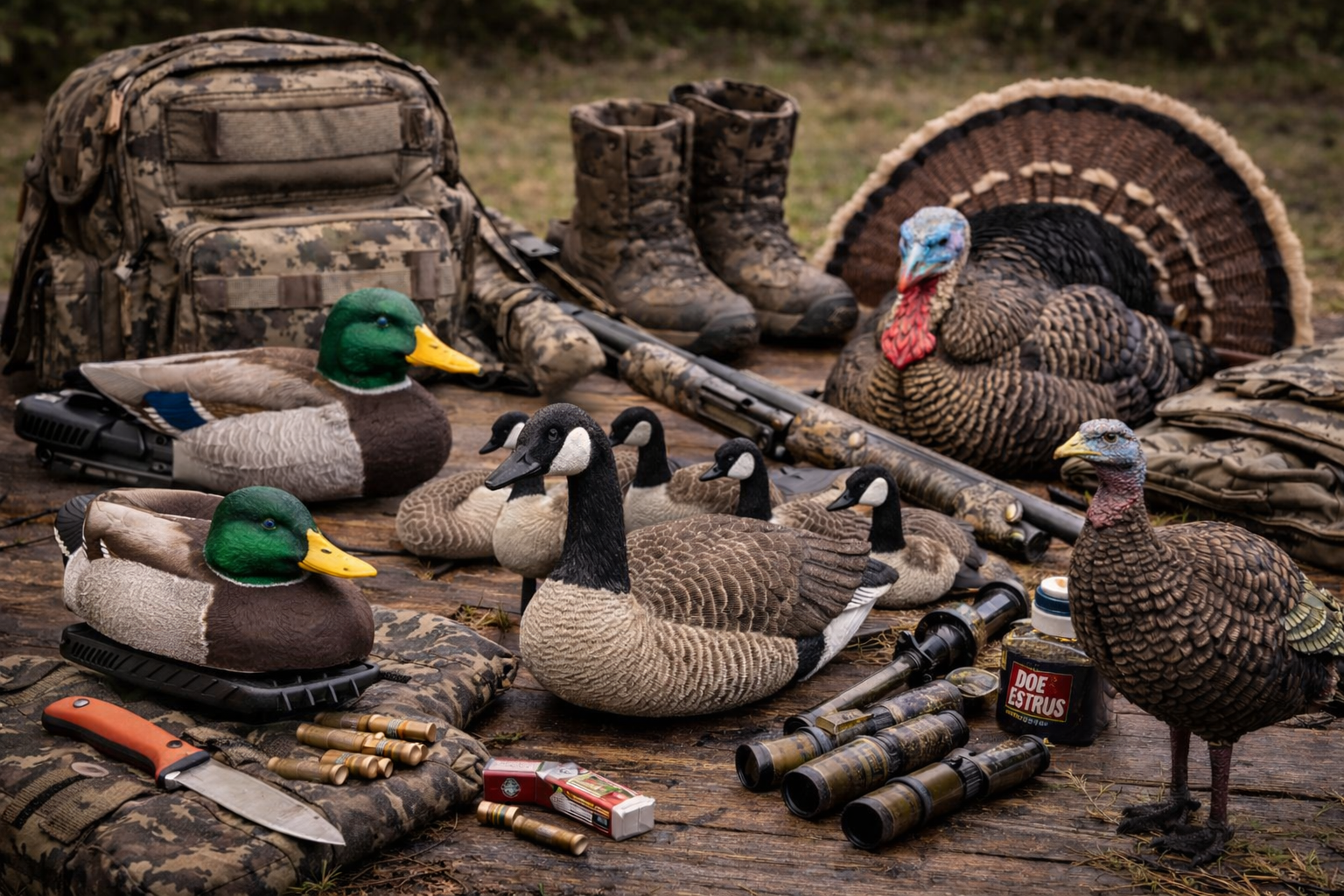
Having the right hunting gear can make the difference between a successful hunt and a frustrating experience. Whether you’re hunting deer, small game, or waterfowl, proper equipment improves safety, comfort, and effectiveness.
In this guide, you’ll learn the essential hunting supplies, what gear actually matters, and how to choose the right setup for your needs.
Why Hunting Gear Matters
Hunting is not just about the firearm or bow. Your overall setup plays a major role in performance.
The right gear helps you:
Stay concealed and undetected
Remain comfortable in harsh conditions
Carry equipment efficiently
Improve accuracy and success rates
Good preparation leads to better results in the field.
Essential Hunting Gear Categories
Clothing and Camouflage
Proper clothing is critical for both comfort and concealment.
Look for:
Weather-appropriate layers
Camouflage patterns suited to your environment
Quiet, scent-resistant materials
Staying warm, dry, and hidden gives you a major advantage.
Optics (Scopes and Binoculars)
Seeing your target clearly is just as important as hitting it.
Common options:
Rifle scopes for precision shooting
Binoculars for spotting game at distance
Rangefinders for accurate distance measurement
Quality optics improve both accuracy and awareness.
Backpacks and Gear Bags
A good pack keeps your equipment organized and accessible.
Important features:
Comfortable straps for long hikes
Enough storage for ammo, food, and tools
Quiet materials to avoid noise
A solid backpack makes long hunts much easier.
Ammunition and Storage
Using the right ammo for your target is essential.
Consider:
Caliber suited to your game
Reliable, high-quality ammunition
Proper storage to keep ammo dry and secure
Consistency and reliability matter more than anything.
Knives and Field Dressing Tools
After the shot, the real work begins.
Must-have tools include:
Sharp hunting knife
Bone saw or multi-tool
Game processing kit
Good tools make field dressing faster and safer.
Calls, Scents, and Attractants
These tools help bring game within range.
Examples include:
Deer calls and grunt tubes
Scent attractants or cover scents
Decoys for specific game
Used correctly, they can significantly increase success.
Safety Gear
Safety should always come first.
Important items:
Blaze orange vest or hat
First aid kit
Flashlight or headlamp
Being visible and prepared can prevent serious accidents.
Choosing Gear for Your Hunting Style
Big Game Hunting
Requires:
High-powered rifle or bow
Durable optics
Heavy-duty clothing
Strong backpack for hauling
Preparation and endurance are key.
Small Game Hunting
Focus on:
Lightweight firearms or air guns
Simple optics or iron sights
Mobility and quick movement
Less gear, more flexibility.
Waterfowl Hunting
Specialized gear includes:
Shotguns and appropriate shells
Decoys and calls
Waterproof clothing and boots
Environment plays a major role here.
Common Mistakes to Avoid
Buying cheap gear that fails in the field
Overpacking unnecessary equipment
Ignoring weather conditions
Not testing gear before hunting
Reliable gear always beats flashy gear.
Tips for Better Hunting Preparation
Practice with your equipment before the season
Organize your gear the night before
Check weather and terrain conditions
Keep your equipment clean and maintained
Preparation builds confidence and improves results.
Final Thoughts
The best hunting gear is not about having the most expensive equipment. It’s about having reliable, practical tools that match your hunting style.
Focus on essentials, invest in quality where it matters, and build your setup over time. With the right gear and preparation, you’ll be ready for a successful hunting season.