Posted on

Best Budget Red Dot Sights Under $100 (2026 Guide)

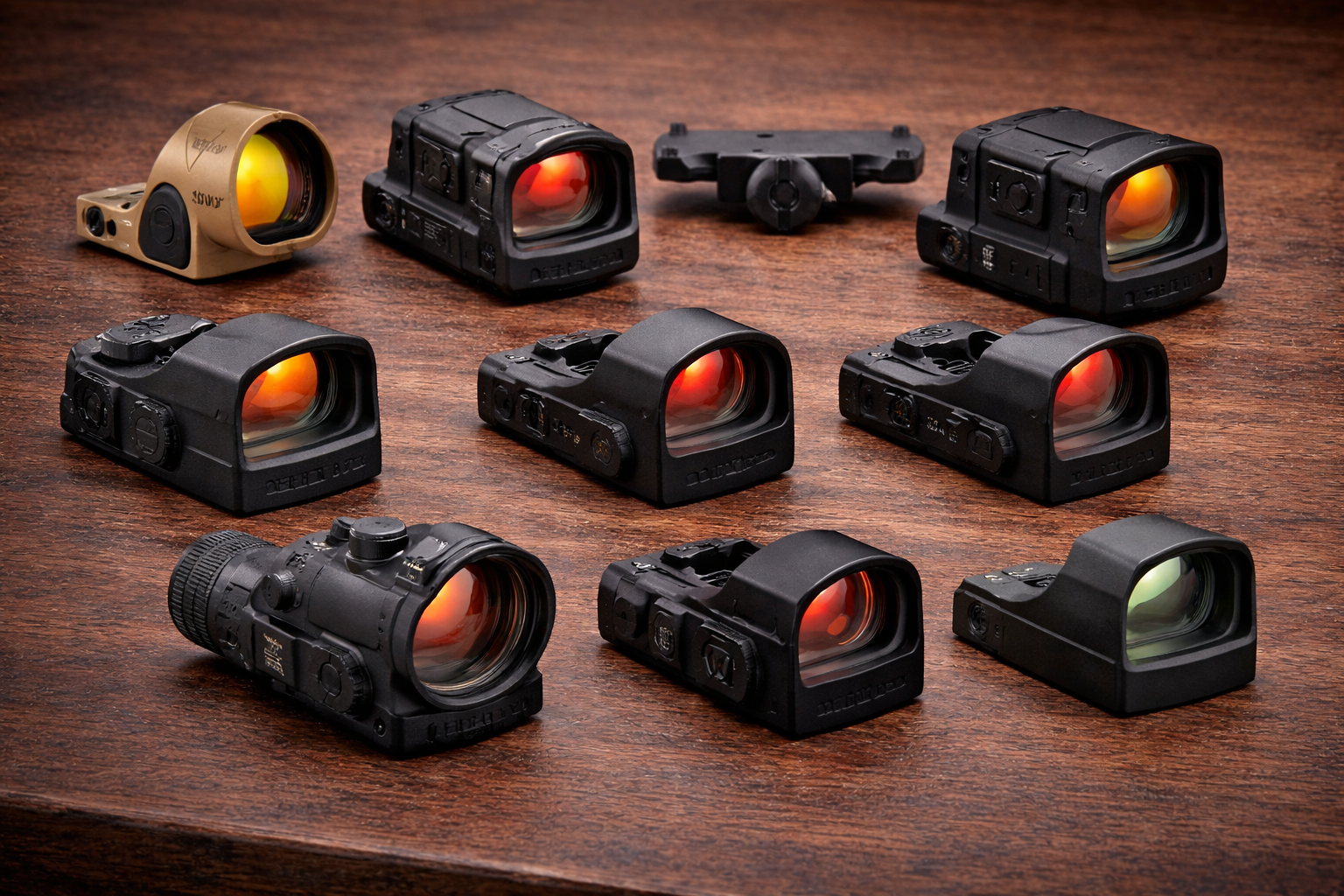
Finding a reliable red dot sight under $100 doesn’t mean you have to settle for poor performance. Whether you’re setting up a home defense firearm, upgrading your range setup, or just getting started, there are several solid options available at this price point.

This guide highlights some of the best red dot sights under $100 currently available from our inventory, focusing on value, reliability, and practical use.


Top Red Dot Sights Under $100

Best Overall: UTG Red Dot 4.0 MOA (With Integral QD Mount)

  • Price: ~$84.97
  • Best for: All-around use

This UTG red dot offers one of the best balances of price and performance. The quick-detach mount makes installation simple, and the 4.0 MOA dot is well-suited for fast target acquisition.

It’s a strong option for both range use and home defense setups.


Best Budget Option: NCSTAR Red Dot Reflex Sight

  • Price: $12.99
  • Best for: Beginners and casual use

This is one of the most affordable entry points into red dot optics. While it’s not designed for heavy use, it’s a practical choice for learning and basic range shooting.


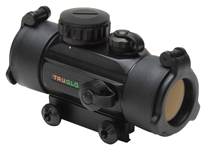
Best Value: TruGlo Red Dot Sight 1x30mm (5 MOA)

  • Price: ~$54.15
  • Best for: Balanced performance

TruGlo has a solid reputation in the budget optics space. This model provides good clarity, reliable performance, and solid construction for the price.


Best for Home Defense: Firefield Impact Reflex Sight

  • Price: ~$59.97
  • Best for: Close-range applications

Designed for fast target acquisition, this reflex sight is a good fit for home defense scenarios where speed matters more than precision at distance.


Most Durable Option Under $100: UTG Micro Dot 4.0 MOA (Adaptive Base)

  • Price: ~$99.97
  • Best for: Durability

If you’re looking for something more rugged within this price range, this UTG model stands out. It offers better build quality than many entry-level optics.


Best Multi-Reticle Option: TruGlo Panoramic Sight (4 Reticle)

  • Price: ~$85.77
  • Best for: Versatility

With multiple reticle options, this sight allows you to adjust your aiming style depending on your setup and preference.


Best Premium Option Under $100: Simmons Pro Target Reflex Sight

  • Price: ~$99.95
  • Best for: Higher-end budget choice

At the upper end of the budget range, this optic offers improved clarity and overall build quality compared to cheaper alternatives.


What to Look for in a Budget Red Dot

Durability

Not all budget optics are built equally. Look for solid construction and a secure mounting system.


Dot Size (MOA)

  • 3–4 MOA: More precise aiming
  • 5 MOA+: Faster target acquisition

For most users, a 4–5 MOA dot is a practical choice.


Mount Compatibility

Ensure the optic fits your firearm’s rail system. Most use standard Picatinny mounts.


Intended Use

  • Range use and training: most budget options will work
  • Home defense: prioritize reliability and ease of use

Are Red Dots Under $100 Worth It?

They can be a good option depending on your expectations.

They work well for:

  • Beginners
  • Range shooting
  • Budget builds

They may not be ideal for:

  • Professional or duty use
  • Heavy or long-term high-stress use

Final Thoughts

There are several solid red dot sights available under $100 if you focus on value and realistic expectations. Models like the UTG and TruGlo options provide dependable performance for most casual and defensive applications.

Choosing the right optic comes down to how you plan to use it and how much durability you need.


Browse More Options

If you’re looking for additional choices, you can browse the full selection of red dot sights under $100 available on our site to compare features, pricing, and availability.
Posted on

9mm 115 Grain FMJ Ammo – Uses, Pros & Beginner Guide

Learn what 9mm 115 grain FMJ ammo is used for, its pros and cons, and whether it’s good for target shooting or beginners. Simple and clear guide.


What is 9mm 115 Grain FMJ Ammo?

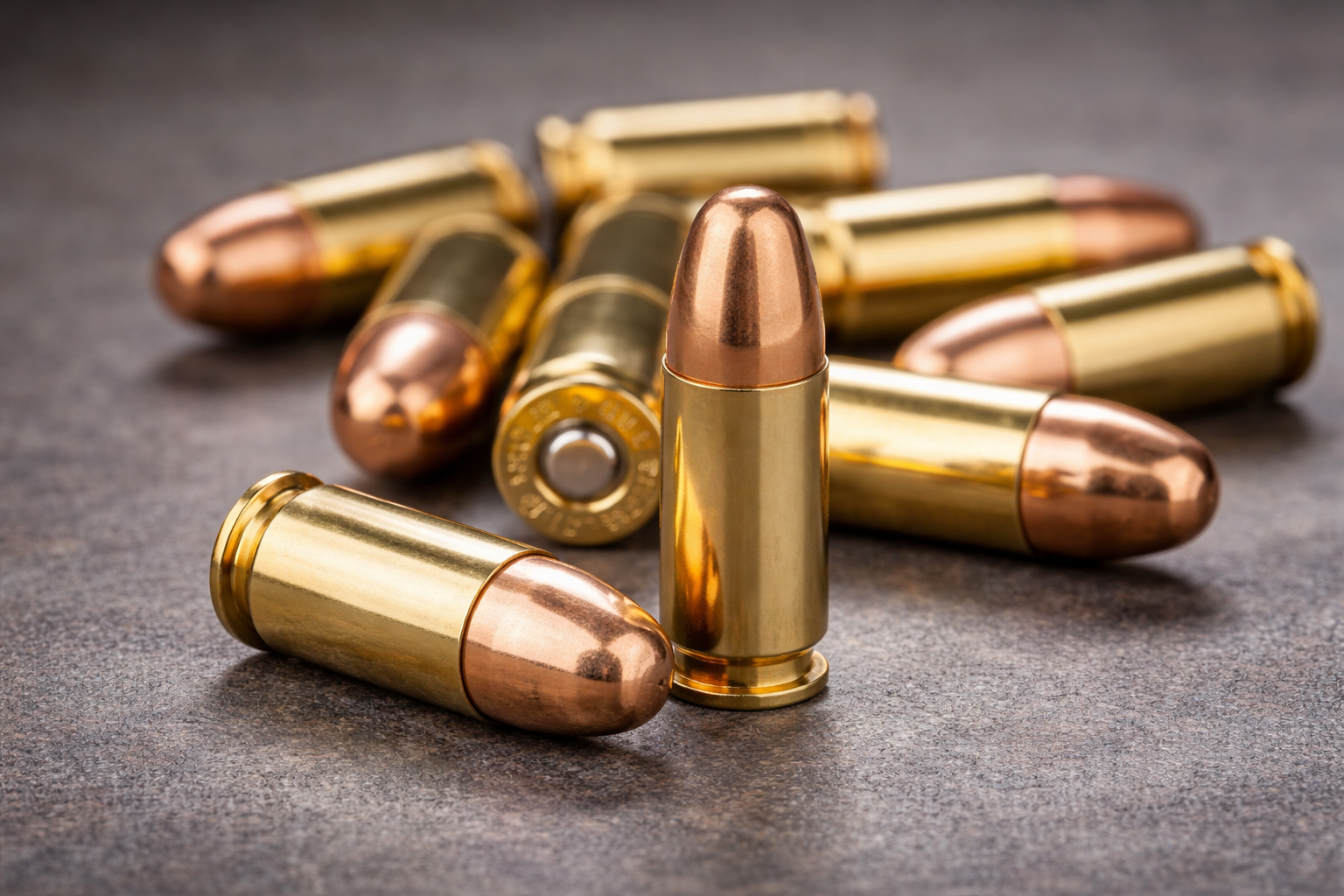
9mm 115 grain FMJ ammo is one of the most commonly used types of handgun ammunition, especially for range shooting and training.

  • 9mm refers to the caliber
  • 115 grain refers to the bullet weight
  • FMJ (Full Metal Jacket) means the bullet has a metal coating

This combination makes it a popular choice because it is affordable, widely available, and reliable.


What is 9mm 115 Grain FMJ Used For?

9mm 115 grain FMJ is mainly used for:

  • Target shooting
  • Range practice
  • Training drills

It is designed for consistent performance and lower recoil, which makes it easier to control during repeated shooting.

This type of ammo is not typically recommended for self-defense because it does not expand on impact.


Is 115 Grain 9mm Good for Beginners?

Yes, 115 grain 9mm ammo is a strong choice for beginners.

It offers:

  • Lower recoil, which makes shooting easier to control
  • Lower cost, allowing for more practice
  • Reliable performance in most handguns

Because of these factors, it is often the first type of ammo new shooters use at the range.


Pros of 9mm 115 Grain FMJ

  • More affordable than many other 9mm options
  • Easier recoil compared to heavier bullets
  • Widely available in stores and online
  • Ideal for high-volume practice

Cons of 9mm 115 Grain FMJ

  • Less stopping power than heavier or expanding rounds
  • Higher chance of overpenetration
  • Not designed for defensive use

115 Grain vs 124 Grain 9mm

Many people compare 115 grain and 124 grain ammo when choosing what to buy.

115 grain:

  • Lighter bullet
  • Lower recoil
  • Best for range and training

124 grain:

  • Slightly heavier bullet
  • More balanced performance
  • Commonly used in defensive loads when paired with hollow points

If your goal is practice and affordability, 115 grain is a solid option. If you want more versatility, 124 grain may be worth considering.


Is 115 Grain FMJ Good for Self-Defense?

In most situations, it is not recommended.

FMJ ammunition:

  • Does not expand
  • Can pass through a target
  • Is less effective at stopping a threat quickly

For self-defense, hollow point ammunition is generally preferred.


Best Use Cases for 115 Grain FMJ

This type of ammo is best for:

  • Range sessions
  • Skill development
  • High-volume shooting
  • New shooters learning fundamentals

It is one of the most practical options if your goal is to improve accuracy and consistency.


Should You Buy 9mm 115 Grain FMJ Ammo?

You should consider it if you:

  • Want affordable practice ammo
  • Are just starting out
  • Shoot frequently at the range

You may want another option if you:

  • Need defensive ammunition
  • Are looking for maximum performance in critical situations

Final Thoughts

9mm 115 grain FMJ ammo remains one of the most popular choices for training and range use. It is affordable, reliable, and easy to shoot, which makes it ideal for beginners and experienced shooters alike.

While it is not designed for defensive purposes, it is one of the best options available for consistent practice.


FAQ

Is 115 grain 9mm good for target shooting?

Yes, it is widely used for target shooting because of its affordability and manageable recoil.

What does FMJ mean in 9mm ammo?

FMJ stands for Full Metal Jacket, meaning the bullet is coated in metal for smoother feeding and reduced wear.

Is 115 grain 9mm weaker than 124 grain?

It is lighter and generally has slightly less impact, but it is still effective for training and range use.

Check our available 9mm ammo options here

Posted on

Best Hunting Supplies and Gear (Complete 2026 Guide)

Having the right hunting gear can make the difference between a successful hunt and a frustrating experience. Whether you’re hunting deer, small game, or waterfowl, proper equipment improves safety, comfort, and effectiveness.

In this guide, you’ll learn the essential hunting supplies, what gear actually matters, and how to choose the right setup for your needs.


Why Hunting Gear Matters

Hunting is not just about the firearm or bow. Your overall setup plays a major role in performance.

The right gear helps you:

Stay concealed and undetected
Remain comfortable in harsh conditions
Carry equipment efficiently
Improve accuracy and success rates

Good preparation leads to better results in the field.


Essential Hunting Gear Categories

Clothing and Camouflage

Proper clothing is critical for both comfort and concealment.

Look for:

Weather-appropriate layers
Camouflage patterns suited to your environment
Quiet, scent-resistant materials

Staying warm, dry, and hidden gives you a major advantage.


Optics (Scopes and Binoculars)

Seeing your target clearly is just as important as hitting it.

Common options:

Rifle scopes for precision shooting
Binoculars for spotting game at distance
Rangefinders for accurate distance measurement

Quality optics improve both accuracy and awareness.


Backpacks and Gear Bags

A good pack keeps your equipment organized and accessible.

Important features:

Comfortable straps for long hikes
Enough storage for ammo, food, and tools
Quiet materials to avoid noise

A solid backpack makes long hunts much easier.


Ammunition and Storage

Using the right ammo for your target is essential.

Consider:

Caliber suited to your game
Reliable, high-quality ammunition
Proper storage to keep ammo dry and secure

Consistency and reliability matter more than anything.


Knives and Field Dressing Tools

After the shot, the real work begins.

Must-have tools include:

Sharp hunting knife
Bone saw or multi-tool
Game processing kit

Good tools make field dressing faster and safer.


Calls, Scents, and Attractants

These tools help bring game within range.

Examples include:

Deer calls and grunt tubes
Scent attractants or cover scents
Decoys for specific game

Used correctly, they can significantly increase success.


Safety Gear

Safety should always come first.

Important items:

Blaze orange vest or hat
First aid kit
Flashlight or headlamp

Being visible and prepared can prevent serious accidents.


Choosing Gear for Your Hunting Style

Big Game Hunting

Requires:

High-powered rifle or bow
Durable optics
Heavy-duty clothing
Strong backpack for hauling

Preparation and endurance are key.


Small Game Hunting

Focus on:

Lightweight firearms or air guns
Simple optics or iron sights
Mobility and quick movement

Less gear, more flexibility.


Waterfowl Hunting

Specialized gear includes:

Shotguns and appropriate shells
Decoys and calls
Waterproof clothing and boots

Environment plays a major role here.


Common Mistakes to Avoid

Buying cheap gear that fails in the field
Overpacking unnecessary equipment
Ignoring weather conditions
Not testing gear before hunting

Reliable gear always beats flashy gear.


Tips for Better Hunting Preparation

Practice with your equipment before the season
Organize your gear the night before
Check weather and terrain conditions
Keep your equipment clean and maintained

Preparation builds confidence and improves results.


Final Thoughts

The best hunting gear is not about having the most expensive equipment. It’s about having reliable, practical tools that match your hunting style.

Focus on essentials, invest in quality where it matters, and build your setup over time. With the right gear and preparation, you’ll be ready for a successful hunting season.

Posted on

Best Red Dot Sights for Home Defense (2026 Guide)

Red dot sights have become increasingly popular for home defense firearms. They allow for faster target acquisition and improved accuracy, especially in high-stress situations.

In this guide, you’ll learn how red dot sights work, their advantages, and how to choose the right one for your home defense setup.


Why Use a Red Dot Sight

Traditional iron sights require alignment of multiple points. A red dot simplifies this process.

Benefits include:

  • Faster target acquisition
  • Easier aiming in low light
  • Improved accuracy under stress

This makes them especially useful for defensive situations.


Types of Red Dot Sights

Open Reflex Sights

Open reflex sights are lightweight and commonly used on pistols.

They offer:

  • Wide field of view
  • Fast target acquisition
  • Compact design

They are a popular choice for handgun setups.


Tube-Style Red Dots

Tube-style red dots are enclosed and often used on rifles or shotguns.

They provide:

  • Better protection from dirt and debris
  • Longer battery life
  • Durable construction

These are ideal for long guns used in home defense.


Key Features to Look For

Reliability

Your optic must function consistently under all conditions.


Battery Life

Look for long battery life or always-on features.


Brightness Settings

Adjustable brightness helps in both daylight and low-light environments.


Durability

Choose a model that can withstand recoil and regular use.


Red Dots for Handguns vs Long Guns

Handguns

  • Smaller optics
  • Lightweight design
  • Fast target acquisition

Rifles and Shotguns

  • Larger optics
  • More durable construction
  • Better for extended range

Common Mistakes to Avoid

  • Choosing the cheapest option available
  • Not practicing with the optic
  • Ignoring battery maintenance
  • Improper mounting or installation

Tips for Using a Red Dot Effectively

  • Practice target acquisition regularly
  • Keep brightness properly adjusted
  • Check zero periodically
  • Replace batteries as needed

Final Thoughts

A red dot sight can significantly improve your speed and accuracy in a home defense situation. While not required, it is a valuable upgrade for many setups.

For most users, a reliable, easy-to-use red dot with good battery life is the best choice.

Posted on

Best Holsters for Concealed Carry (2026 Guide)

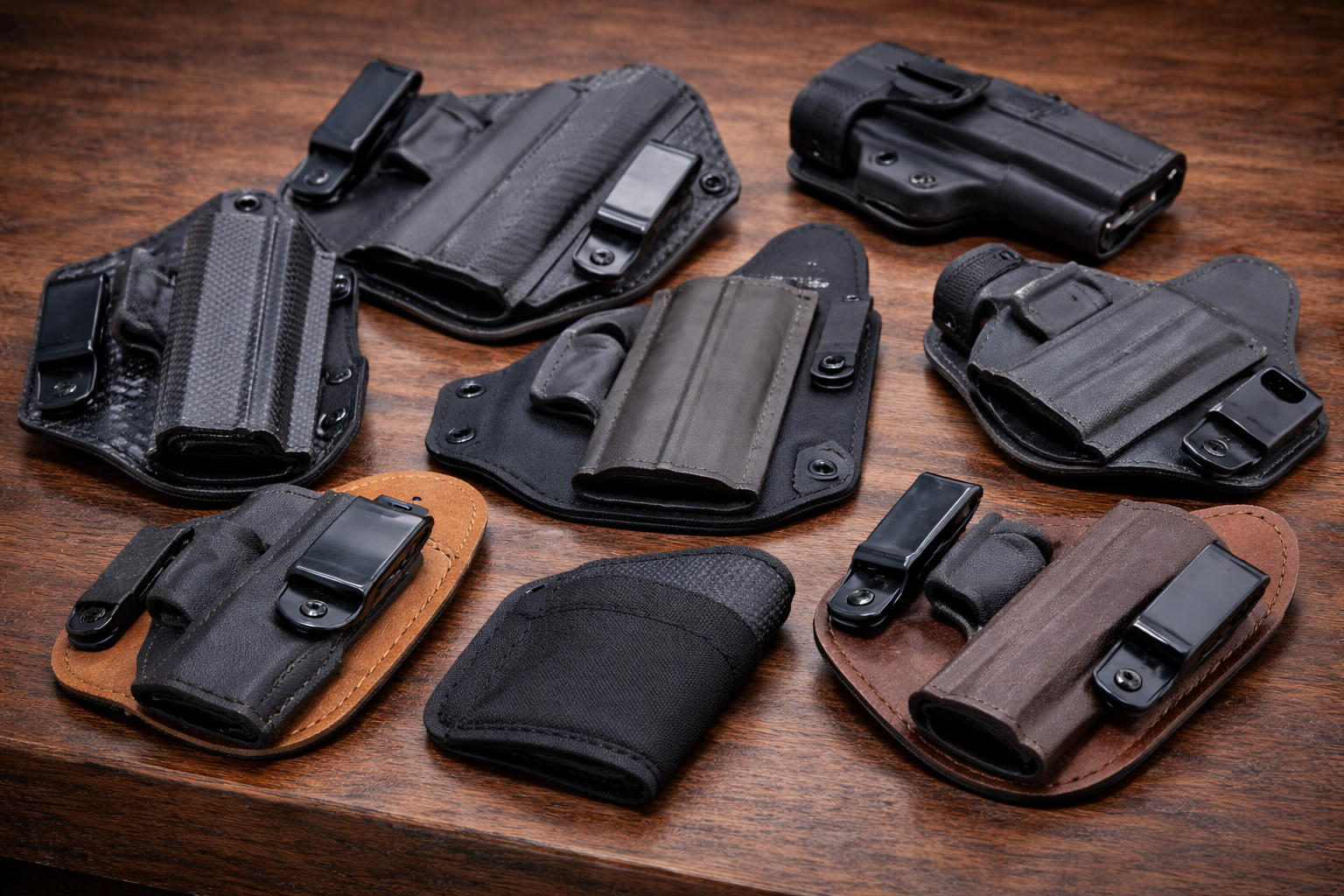
Choosing the right holster is just as important as choosing the right firearm. A good holster keeps your firearm secure, accessible, and properly concealed throughout the day.

In this guide, you’ll learn the different types of holsters, what features matter most, and how to choose the best option for your concealed carry setup.


Why Holster Choice Matters

A poor holster can create serious problems.

The wrong holster can:

  • Make your firearm uncomfortable to carry
  • Slow down your draw
  • Increase the risk of accidental exposure
  • Reduce overall safety

The goal is to find a balance between comfort, concealment, and accessibility.


Best Holster Types for Concealed Carry

Inside-the-Waistband (IWB)

IWB holsters are worn inside the waistband and are the most common choice for concealed carry.

They offer:

  • Excellent concealment
  • Good balance of comfort and access
  • Compatibility with most clothing styles

This is the best starting point for most people.


Appendix Carry (AIWB)

Appendix carry positions the holster at the front of the body.

It provides:

  • Faster draw times
  • Better concealment for many users
  • Easier access while seated

Comfort can vary depending on body type and setup.


Outside-the-Waistband (OWB)

OWB holsters are worn outside the waistband.

They offer:

  • Greater comfort
  • Easier draw
  • Better for larger firearms

However, they are harder to conceal and require proper clothing.


Pocket Holsters

Pocket holsters are designed for small handguns.

They provide:

  • Deep concealment
  • Lightweight carry
  • Simple setup

They are best suited for compact or backup firearms.


Holster Materials

Kydex

Kydex holsters are rigid and durable.

They offer:

  • Strong retention
  • Consistent draw
  • Minimal maintenance

They are one of the most popular options for concealed carry.


Leather

Leather holsters are more flexible and comfortable.

They provide:

  • A more natural fit
  • Comfortable long-term wear

They may require more maintenance over time.


Hybrid

Hybrid holsters combine materials, typically Kydex and leather.

They aim to balance:

  • Comfort
  • Retention
  • Durability

Features to Look For

When choosing a holster, focus on the essentials.

Retention

The holster should securely hold your firearm in place.


Trigger Coverage

The trigger must be fully covered to prevent accidental discharge.


Comfort

If it’s not comfortable, you won’t carry it consistently.


Concealment

The holster should minimize printing under clothing.


Common Mistakes to Avoid

  • Using cheap or poorly made holsters
  • Ignoring comfort and fit
  • Choosing the wrong size for your firearm
  • Not practicing your draw

Tips for Choosing the Right Holster

  • Start with a quality IWB holster
  • Test different carry positions
  • Make adjustments for comfort and concealment
  • Practice drawing safely

Final Thoughts

The best holster for concealed carry is one that allows you to carry comfortably, conceal effectively, and access your firearm quickly.

For most people, a quality IWB or appendix holster will provide the best balance for everyday carry.


Posted on

Best Ammo for Home Defense (Complete 2026 Guide)

Choosing the right firearm is only part of the equation. The ammunition you use plays a major role in how effective and safe your home defense setup is.

The type of ammo affects stopping power, accuracy, and how much it penetrates through walls. In this guide, you’ll learn which options are best, what to avoid, and how to choose the right ammunition for your situation.


Why Ammo Choice Matters

Not all ammunition performs the same. The wrong choice can:

  • Travel through walls and create additional risk
  • Fail to stop a threat effectively
  • Reduce your ability to control the firearm

The goal is to find a balance between effectiveness and safety inside a home environment.


Best Ammo Types for Home Defense

Hollow Point (Best for Handguns)

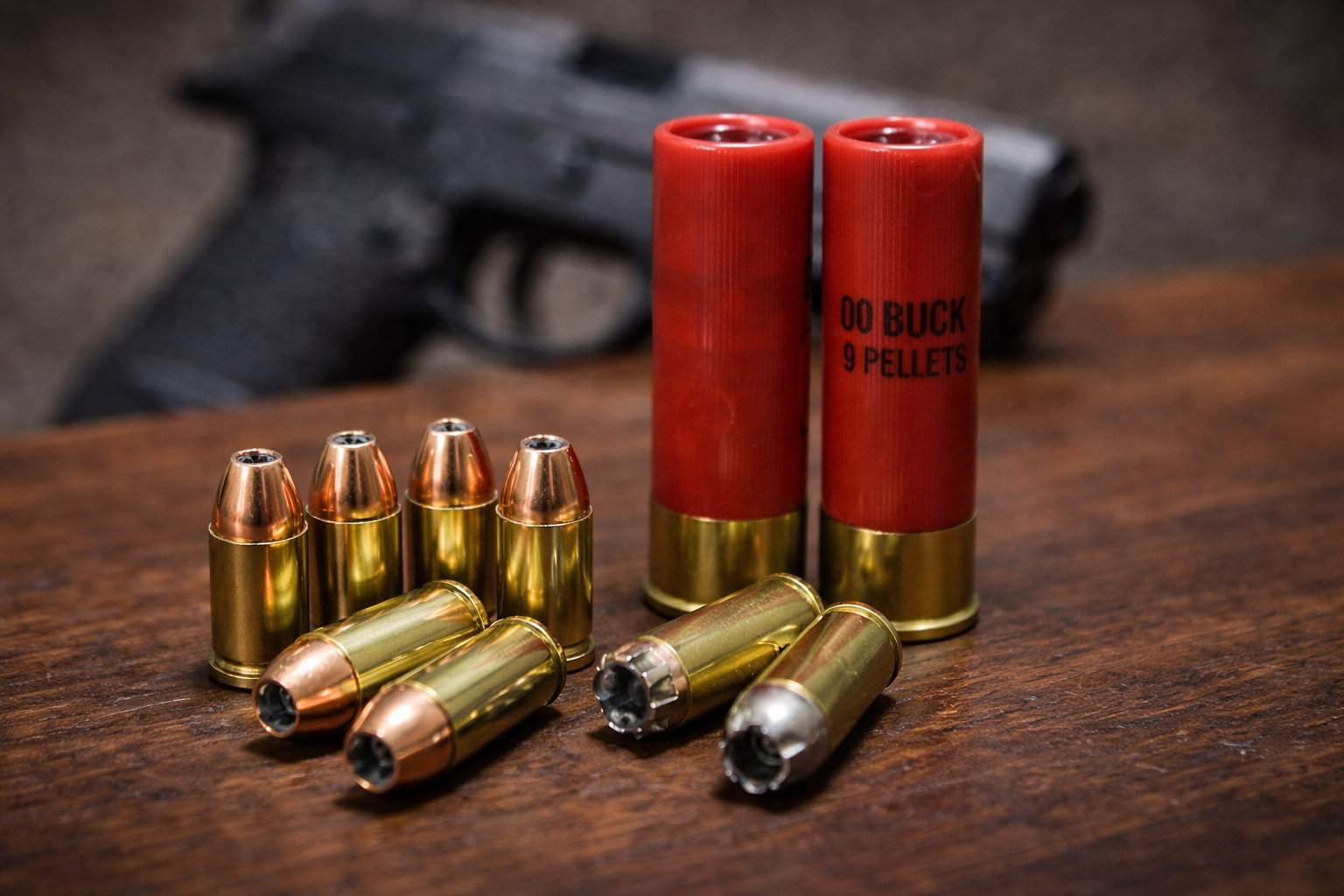
Hollow point rounds are designed to expand on impact. This helps transfer energy more effectively and reduces the chance of the bullet passing through multiple surfaces.

They are widely considered the best choice for handgun home defense.


Soft Point

Soft point ammunition expands more gradually than hollow points. It provides a balance between penetration and expansion.

While not as common for handguns, it can still be a solid option depending on your setup.


Frangible Ammo

Frangible rounds are designed to break apart on impact. This reduces the chance of ricochet and limits penetration through walls.

They are more specialized and less commonly used, but can be useful in certain situations.


Best Shotgun Ammo for Home Defense

Buckshot

Buckshot is the most commonly recommended shotgun ammunition for home defense.

It offers strong stopping power at close range and is effective in typical home distances. The most widely used option is 00 buckshot.


#4 Buckshot

This is a slightly lighter option than 00 buck. It can reduce penetration while still being effective.


Birdshot

Birdshot is often suggested, but it is generally not recommended for defense. It lacks the stopping power needed in a serious situation.


Understanding Overpenetration

One of the biggest concerns with home defense is how far a round can travel after impact.

To reduce this risk:

  • Use hollow point ammunition for handguns
  • Use buckshot instead of slugs for shotguns
  • Be aware of your surroundings and what’s behind your target

Tips for Choosing the Right Ammo

  • Choose well-known, reliable brands
  • Test your ammunition at the range
  • Make sure it functions properly in your firearm
  • Avoid using the cheapest options for defensive use

Final Thoughts

The best ammo for home defense is not necessarily the most powerful. It’s the option that gives you control, reliability, and a reduced risk inside your home.

For most people, hollow point handgun ammunition or buckshot for shotguns will be the most practical and effective choice.


Not sure which firearm to pair with this ammo? Check out our full guide

Posted on

Best Firearms for Home Defense (Beginner’s Guide for 2026)

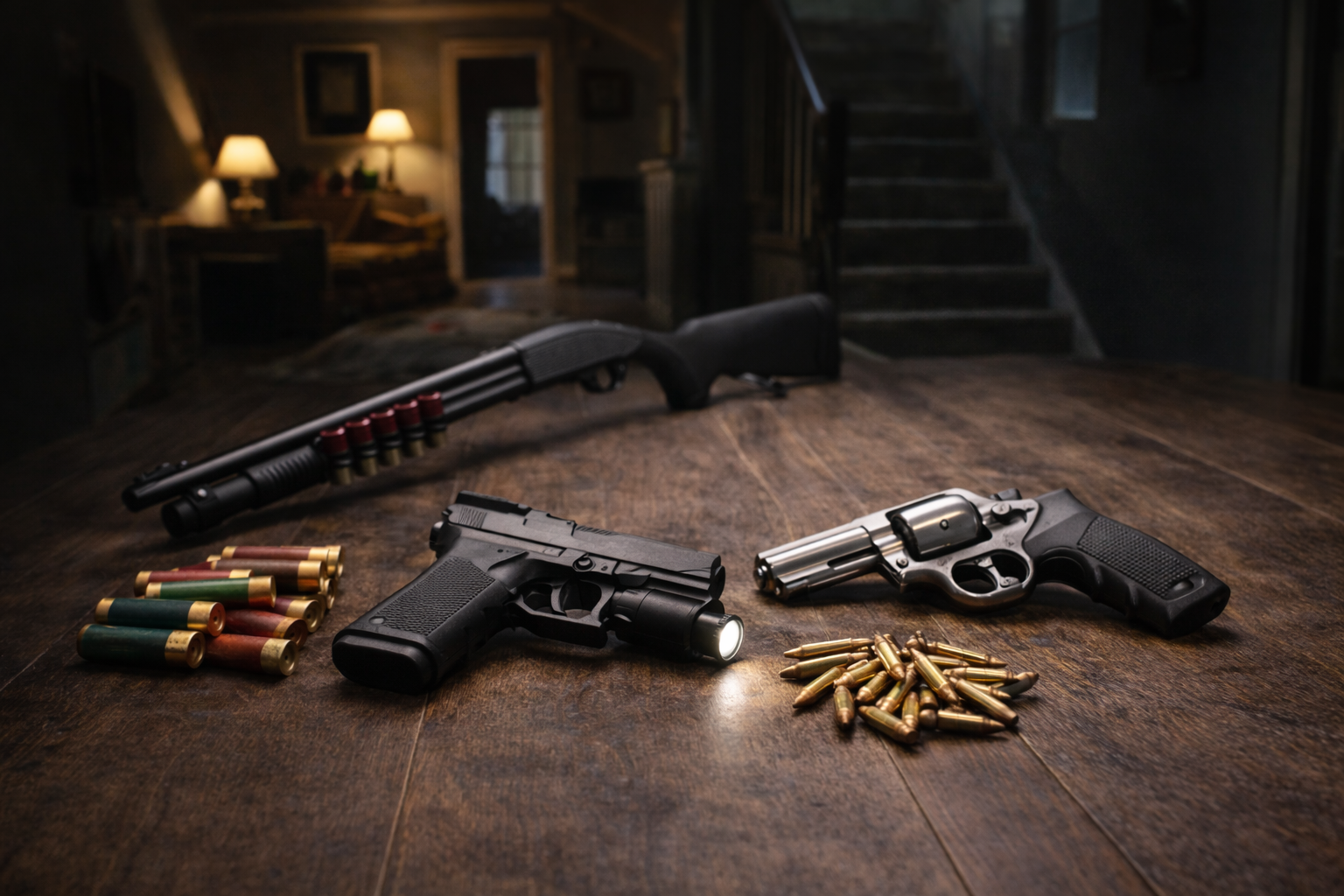
Choosing the right firearm for home defense is one of the most important decisions you can make for your safety and peace of mind. With so many options available, it can be overwhelming for beginners to know where to start.

In this guide, we’ll break down the best types of firearms for home defense, what to consider before buying, and how to choose the right option for your situation.


What Makes a Good Home Defense Firearm?

Not every firearm is ideal for home defense. The best options are:

  • Reliable and easy to use
  • Effective at stopping a threat
  • Manageable in terms of recoil
  • Suitable for indoor environments

You also want something you can safely store but access quickly if needed.


Handguns for Home Defense

Handguns are one of the most popular choices for home defense.

Pros:

  • Easy to store
  • Compact and maneuverable
  • Can be used with one hand

Cons:

  • Requires more practice for accuracy
  • Less stopping power than larger firearms

For beginners, full-size or compact 9mm pistols are often recommended due to manageable recoil and availability of ammunition.


Shotguns for Home Defense

Shotguns are widely considered one of the most effective home defense tools.

Pros:

  • High stopping power
  • Easier aiming at close range
  • Reliable and simple operation

Cons:

  • Larger and harder to maneuver
  • Recoil can be strong

A pump-action shotgun is a common and dependable choice for many homeowners.


Rifles for Home Defense

Modern rifles are also used for home defense, especially in certain environments.

Pros:

  • High accuracy
  • Lower recoil compared to shotguns
  • Larger magazine capacity

Cons:

  • Longer size can be harder indoors
  • Over-penetration concerns

Rifles can be a good option for those comfortable with their operation and aware of safety considerations.


Key Factors to Consider Before Buying

Before choosing a firearm, think about:

Your experience level
Beginners should prioritize ease of use and safety.

Home layout
Tight spaces may favor compact firearms.

Recoil tolerance
Some firearms are easier to control than others.

Storage and accessibility
Secure storage is essential, especially in homes with children.


Common Mistakes to Avoid

Many first-time buyers make these mistakes:

  • Choosing a firearm that’s too powerful to control
  • Not practicing regularly
  • Ignoring proper storage solutions
  • Buying based only on price

Taking time to learn and train makes a huge difference.


Final Thoughts

The best firearm for home defense depends on your specific needs, experience, and environment. Whether you choose a handgun, shotgun, or rifle, the most important factors are safety, reliability, and proper training.

If you’re unsure where to start, take the time to research your options and choose a firearm that you can handle confidently and responsibly.

Looking to purchase a firearm or need help choosing the right option? Browse our available inventory or contact us for guidance. We make the buying process simple with clear FFL transfer instructions.